Home » Jazz Articles » Album Review » Veronica Swift: Veronica Swift
Veronica Swift: Veronica Swift


Veronica Swift
vocals
Ella Fitzgerald
vocals1917 - 1996

Jimi Hendrix
guitar, electric1942 - 1970
An answer is the third track on her self-titled album, a glorious version of

Duke Ellington
piano1899 - 1974
Swift is a self-described "transgenre artist" who pushes hard at the margins. With "I Am What I Am," the album's lead cut, she takes it "nice and easy" at first (to use

Tina Turner
vocals1939 - 2023
She alters the mood with her fourth offering, a superb medley of

Queen
band / ensemble / orchestra
Nat King Cole
piano and vocals1919 - 1965
Actually, Veronica Swift's first side was recorded when she was nine, with her parents, bebop pianist

Hod O'Brien
piano1936 - 2016

Stephanie Nakasian
vocals
Thelonious Monk
piano1917 - 1982
Track Listing
I Am What I Am; Closer; Do Nothing Till You Hear from Me; The Show Must Go On; I'm Always Chasing Rainbows; In the Moonlight; Severed Heads; Je Veux Vivre; Chega de Saudade; Keep Yourself Alive
Personnel
Veronica Swift
vocals
Adam Klipple
organ, Hammond B3
Philip Norris
bass
Alexander Claffy
bassChris Whiteman
guitarBrian Viglione
drums
James Sarno
trumpet
Troy Roberts
saxophone
David Leon
saxophone, altoAdditional Instrumentation
Benny Benack III, trumpet; Ludovic Bier, accordion; Pierre Blanchard, violin; Carolynne Framil, vocals; Antonio Licusati, upright bass; David Mann, woodwinds, digital orchestration; Javier Nero, trombone; Austin Patterson, vocals; Luisito Quintero, percussion; Samson Schmitt, guitar; Antoine Silverman, violins, violas; Randy Waldman, piano.
Album information
Title: Veronica Swift | Year Released: 2023 | Record Label: Mack Avenue Records
Tags
Comments
PREVIOUS / NEXT

Veronica Swift Concerts
Veronica Swift
The VogelRed Bank, NJ
Veronica Swift With Texins Jazz Band And Gdyo Jazz...
Eisemann CenterRichardson, TX
Django Festival Allstars w/Special Guest Veronica Swift
Bach Dancing & Dynamite SocietyHalf Moon Bay, CA
Support All About Jazz
 All About Jazz has been a pillar of jazz since 1995, championing it as an art form and, more importantly, supporting the musicians who make it. Our enduring commitment has made "AAJ" one of the most culturally important websites of its kind, read by hundreds of thousands of fans, musicians and industry figures every month.
Go Ad Free!
To maintain our platform while developing new means to foster jazz discovery and connectivity, we need your help. You can become a sustaining member for as little as $20 and in return, we'll immediately hide those pesky ads plus provide access to future articles for a full year. This winning combination vastly improves your AAJ experience and allow us to vigorously build on the pioneering work we first started in 1995. So enjoy an ad-free AAJ experience and help us remain a positive beacon for jazz by making a donation today.Showcase
 Buy Now
Featured
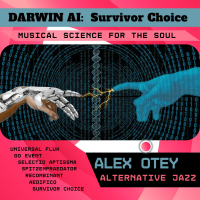
Darwin AI: Surivior Choice
By Alex Otey buy
Carnaval - The Songs Were So Beautiful
By Antonio Adolfo buyGiveaway