Home » Jazz Articles » SoCal Jazz » Jimmy Haslip: Amperes Beyond The BASSics, Part 1
Jimmy Haslip: Amperes Beyond The BASSics, Part 1


I really loved working with Allan Holdsworth. He took things to a whole different level harmonically, and just the vibe of his music. Allan's playing was very deep emotionally.
—Jimmy Haslip

Jimmy Haslip
bassb.1951
All About Jazz: I believe it is against the Geneva Convention to not talk about

Yellowjackets
band / ensemble / orchestrab.1977
Jimmy Haslip: Its quite a large body of what I have accomplished so far in my professional career. Thirty-two years out of fifty-two years as a professional. When the Yellowjackets got together none of us ever would have ever thought that it would last as long as it did, and of course it is still going, I have been out of the band for eight years now. The band is still alive and well. They have done three more records since I left in 2012. I'm still very good friends with all the members,

Robben Ford
guitarb.1951

Russell Ferrante
keyboardsb.1952

Bob Mintzer
saxophoneb.1953

Will Kennedy
drums
Peter Erskine
drumsb.1954

Alex Acuña
percussionb.1944

Luis Conte
percussionb.1954

Dave Samuels
vibraphone1948 - 2019

Bobby McFerrin
vocalsb.1950
 "
data-original-title="" title="">Brenda Russell,
"
data-original-title="" title="">Brenda Russell, 
Al Jarreau
vocals1940 - 2017
AAJ: Two Grammys and eighteen nominations speaks volumes for the success of the Yellowjackets.
JH: Yes, and that is out of twenty-two records.
AAJ: Eighteen out of twenty-two is pretty damn impressive no matter how you slice it.
JH: (laughing) Yeah, it's a pretty good batting average. All that attention was icing on the cake. All of us were excited and motivated about working together, writing music together, and performing together. When 2012 came along I turned sixty years old and took a hard look at all the touring and demanding schedules that I had kept up. I was reaching a certain pinnacle in my life where I was looking to perhaps change some things up. People will say that change is good sometimes. I felt like I needed some sort of change in my life as far as my career. While I was still in the band, I had started producing records for other artists. I had produced over ninety records while I was still with the Jackets. So, I started thinking of that as something I could do. As it turned out, in 2012, I was solicited by nine different artists to produce their records. I was perplexed as to how I was going to fit that all into my schedule. So, leaving the band started to be a consideration.
AAJ: A big consideration as well, I believe, is that you wanted to spend more time with your family.
JH: Yeah, there were a lot of different elements to it, as is going to be the case in a major life changing decision. My family was definitely one of the primary considerations involved in making that decision. Despite being on the road up to ten months a year I managed to have a very close relationship with my daughter and my two stepsons. They are incredible kids. It wasn't the optimum situation to be on the road so much, but my kids really were supportive. Like I say, they are really good kids. When we were together, we made sure that it was always super quality time and that gave us a strong family foundation. In 2012 my kids were grown, and I felt like I needed to connect even more and be there for them.
AAJ: To put it in perspective, how old were your kids at that time?
JH: My daughter was just turning eighteen, so a very important time. My oldest stepson was thirty-two and my youngest was twenty-nine. There were some things that I knew I could really help them with. The fact that I was turning sixty was a factor as well. It just seemed like the right time to make that kind of change in my life. Slow things down a little and be more involved with my family. Not to mention my wife(laughing). We needed and wanted more time together too, of course.
AAJ: That had to be a gut-wrenching decision when you left the band in 2012.
JH: It was very difficult. There was lot going on with the band including a new record deal. I ended up doing the first record for that deal. But the time with my family and the amount of production work coming my way helped pushed me over the edge in making that decision.
AAJ: It was to be a one-year leave of absence at the outset. Correct?
JH: Well, that's what we leaked out (laughing throughout) to anyone that was interested. Promoters, record companies, fan base, and people like that. I knew I was done but we did it that way out of respect for the band. We didn't want anything negative to be coming out that might get in the way of their continued success. We just made it seem like it was a hiatus, just taking a break. That way I could still do a few gigs with them in 2012 if needed. Which I ended up doing. The record company had contract expectations and we didn't want to create any perceived issues with that. We just wanted to ease things out more slowly.
AAJ: The transition then was kind of smooth then, since you already had production projects lined up that would keep you closer to home?
JH: Yes, I dove right in. I started bringing in other bass players some of the time. I was still playing, but I have no ego about that sort of thing. If a different bassist is what is best for the project, for the music, then that's what I do. I have a lot of friends that are bass players. It's great to get them involved and working on some records.
AAJ: That's great that you can do that, Jimmy. The music is what matters. Not everyone can check their ego at the door like that.
JH: The music has to be what is most important. Determining the right musicians for a project and who I can get involved is critical in making the music come to life. There are a lot of great musicians here in Los Angeles and all over the world. I have been fortunate to have traveled all over the world and met many musicians. I have stayed in contact with many of them. I have contact with jazz musicians all over the world. I'm proud of that and I am happy to be able to bring work to these many deserving musicians on our planet. It's a big plus for me. I get to work with people all over the world.
AAJ: The volume of work and artists you have played with in the eight years post Yellowjackets is staggering. We won't have time to talk about all of it today, but we'll give it a good shot. One thing you have done is cut back your touring a lot by doing even more production work. That obviously keeps you closer to home and your family life. You clearly are just as comfortable on the other side of the glass.
JH: I am, yeah. I love music. I enjoy the social element of making records in bringing musicians together to work on projects. It's a natural joyful experience for me. I never feel stressed about doing recording sessions or organizing and scheduling. I am good at multi-tasking. It's fun for me to do it.
AAJ: One project that stood out to me is with guitar wizard

Dewa Budjana
guitar, electricb.1963

Jimmy Johnson
bassb.1930

Vinnie Colaiuta
drumsb.1956
JH: I met Dewa through another Indonesian musician named

Dwiki Dharmawan
keyboards
Jeff Lorber
keyboardsb.1952

Chad Wackerman
drums
Allan Holdsworth
guitar, electric1948 - 2017

Nicolas Meier
guitar, acousticAAJ: I'm familiar with Meier. I saw him play with

Jeff Beck
guitar1944 - 2023
JH: That's the guy, yeah. Nicolas and I became friends and he called me to tell me he was going to tour with another guitarist. That turned out to be Dewa. Matter of fact it was in support of the record you mentioned, Surya Namaskar, and Infinity. They had some gigs, mostly in London, where Nicolas now lives. He asked me to come over and play along with a drummer from Israel, who also now lives in London, named

Asaf Sirkis
drumsb.1969
AAJ: I can't tell you how glad I am that I brought up Dewa Budjana. That's a lot of great information. I will seriously be looking forward to hearing that one.
JH: I am mixing it with a great engineer named
Karma Auger
drums
Brian Auger
organ, Hammond B3b.1939
AAJ: That is so very cool. The next generation rolls on.
JH: Yeah and we are about seventy percent completed with it. I'm not sure when it is going to come out yet, but I am going to help them find a home for it. It's a truly excellent record. Dewa and Nicolas both contributed new music to this record. It's, I suppose, kind of a world beat ethnic fusion sound.
AAJ: I will keep an eye out for it. What is going to be called?
JH: That's a good question(laughing). We are still throwing some ideas around. No title as of it now.
AAJ: Well, I'm sure I will find it because that kind of music really appeals to me.
JH: I will make sure you know about it, Jim. I will send you a message and give you a heads up. Better yet, I will make sure that you get a copy sent to you.
AAJ: That's very kind. Much appreciated, to say the least. Hopefully, I can have my review posted the same week that it comes out.
JH: That would be awesome, Jim.
AAJ: Before we dive into other artists you have been playing and producing records with, let's shift gears for a minute and go back to the beginning. You grew up in the Bronx. What was that like? Tell me about your mom and dad.
JH: I was born in the Bronx and was there for a little while as a young boy. I actually grew up in Long Island. My parents moved there when I was quite young, maybe five or six years old. I do remember a few things from the Bronx, which I guess is doing pretty well since I was a preschooler and that was so long ago.
AAJ: So, you were exposed to a lot of different types of music from an early age. A lot of salsa and Latin for sure. Were you listening to rock and jazz as well?
JH: Yeah, for sure. A whole lot of music. My mom and dad would be listening to everything from

Count Basie
piano1904 - 1984

Tito Puente
drums1923 - 2000

Miles Davis
trumpet1926 - 1991

John Coltrane
saxophone1926 - 1967

Thelonious Monk
piano1917 - 1982

Dave Brubeck
piano1920 - 2012

Eric Dolphy
woodwinds1928 - 1964

Johnny Mathis
vocalsb.1935

Eric Burdon
vocalsb.1941

The Beatles
band / ensemble / orchestra
The Rolling Stones
band / ensemble / orchestrab.1962

Led Zeppelin
band / ensemble / orchestrab.1968

Jimi Hendrix
guitar, electric1942 - 1970
 "
data-original-title="" title="">Jethro Tull, and lots of others. Back then we still had music programs in the public schools. In about the fourth grade I was given the opportunity to learn how to play music, which I thought was very exciting. I jumped at the chance and ended up playing trumpet all the way through the age of eighteen.
"
data-original-title="" title="">Jethro Tull, and lots of others. Back then we still had music programs in the public schools. In about the fourth grade I was given the opportunity to learn how to play music, which I thought was very exciting. I jumped at the chance and ended up playing trumpet all the way through the age of eighteen. AAJ: My next question was going to be if you started with the bass or if there were other stops along the way. It appears you just answered that.
JH: I also learned how to play the bugle at the same time. I played a lot of brass instruments. I played trumpet in school orchestras and jazz bands. It was fun getting in there with all these other kids playing music. Due to necessity, as in no one else available to do it, I played the tuba a bit and a baritone horn. I became a troop bugler with the Boy Scouts. We were sponsored by the American Legion. It turned into a very interesting experience as a kid when the American Legion would ask me to join them on Memorial Day and play "Taps." We would go to various cemeteries in the area that the American Legion had already prearranged with flowers and other adornments. There would be some kind of gun salute and all that. At a young age that kind of an experience was pretty eye opening.
AAJ: Fast forwarding again for a moment, all that experience with brass instruments has to be helpful all these years later in the production process. I say that from the perspective of having a better grasp of where the brass players are coming from. What is realistic and what isn't. I suppose the, having walked in another man's shoes, perspective.
JH: Yes, we are always learning and that was an important early lesson. I left Long Island when I was eighteen to become a professional musician. There were plenty of horns in most of the bands I played in. As time wears on you realize more and more how important knowledge is as an aspect of anything you want to accomplish in life. In my case, now being a producer, the more I can learn about music and instruments and musicians the better. All the years with the Yellowjackets is a fine example of that. We were creating music centering on a guitarist, with Robben Ford, early on. But then we brought in Marc Russo on alto saxophone and that naturally changed the focus of the band. Then a few years later bringing in a tenor saxophonist, Bob Mintzer, once again altered the sound and production needs to accommodate that. Mintzer afforded us the opportunity to play as the rhythm section for big bands as well. That is yet another set of tools and knowledge to both play and produce that kind of sound. Bob would get these gigs in Europe and the United States and he would bring us, the Jackets, along as the rhythm section. So, then what started happening is that we would be playing our tunes in a big band format. Bob did all that arranging, and I did a whole lot of learning.
AAJ: That had to be a lot of fun and a great experience.
JH: It was a total blast! At one point we had eighteen Yellowjackets songs all written out for big band. We had a whole book of big band music that we could implement at any point and time. That grew even further once we had a relationship with a very wonderful composer and arranger by the name of

Vince Mendoza
composer / conductorb.1961
AAJ: Its fascinating that the experience with the Yellowjackets was so much of a training ground for a large body of production capabilities.
JH: Yeah, we were able to sit in at jazz festivals with a seventy-piece orchestra or an eighteen-piece big band or as the traditional band.
AAJ: Well too, you worked with quite a few guest artists. All of them had to create a need for production and arrangement adjustments.
JH: Yes, we had

Tim Hagans
trumpetb.1954

Mike Stern
guitarb.1953
AAJ: That alone created an entirely different picture. Sure, you had worked with Ford and other guitarists, but Stern's style is so uniquely crafted and improvisationally wide.
JH: The record we did with Mike, Lifecycles (Heads Up Records, 2008), was an incredible experience. You always bring your A game to any recording session or show, but yeah Mike is a special breed.
AAJ: Difficult for much of anything to come along now that is going to throw you for much of a loop. And if someone does come at you with something interesting that is outside the parameters it would, I imagine, be a welcome challenge that you would be excited to take on.
JH: Yes, I am fortunate to have had such strong and close-up insights into a wide and varied scope of music and production techniques. The versatility of the band just opened up so many facets of playing and producing. On top of that I was able to co-produce twenty of the Jackets records. Then too, I learned so much from producer Tommy LiPuma on the first two records. After that we signed a deal with MCA Jazz. At that point we just started producing our own records.
AAJ: So, you were seven when you started playing the trumpet. At what age did the bass come into the picture?
JH: I was thirteen when I started playing bass. That was kind of a fluke. I was just hanging out with some buddies of mine from the football team. I played a lot of sports as a kid.
AAJ: Oh, that's cool. I did too. What all did you play?
JH: I played almost all of them. Four or five teams a year. Football, basketball, track, lacrosse, and I was always playing baseball in the summer, either with a church team or some kind of sports club. As much as I loved music, I was really way more into sports. But anyways, I was hanging out with these guys and they were putting together a band to play a pool party. They didn't have a bassist, so they asked me if I would do it. So, I talked to my dad and he was totally into it. We went to a local music store and got a bass and an amp. I played one summer with these guys and had a blast. So, I just decided to keep playing it. In high school I played sports and I played in a rock band. I didn't think of music as a career back then. I went to community college for a year and got kind of bored with it. So now I'm thinking about what to do as far as a career and it just so happened that I ran into a buddy of mine one night who mentioned that his cousin was looking for a bassist. These guys were a little older than me and had gigs in night clubs and stuff. Well, you know that was a whole different thing. I mean I had only been playing high school dances and pool parties, not professional gigs. So, I went and auditioned for the band and I thought man these guys are old(laughing). They were all like between twenty-five and thirty(laughing).
AAJ: (laughing) Yeah when you're eighteen that age difference is quite a bit. It seems like a lot more than it does now.
JH: Exactly. Now I can look back and laugh. They were also much more experienced musicians. I was just a kid, not a professional. I left the audition thinking that there was no chance in hell that I was going to get that gig. Playing the bass had been a hobby for me.
AAJ: A bit more serious about the trumpet up until that point?
JH: No, not really. I was more into shooting hoops. But sure enough, I got that gig. That was a mind-blowing experience to be in this band with these older guys that were pretty experienced musicians. It was Top 40, but some pretty cool stuff. I was learning new music from these guys that were on a whole different level than I was at.
AAJ: That had to be the turning point for you. One minute you were dropping out of community college and not knowing what was next. This had to be the first time you were actually looking at it as a possible career.
JH: Yes, I looked at it as an incredible opportunity to start with. All of a sudden, I was playing five forty minutes sets seven nights a week. I started to think that maybe, just maybe, I could do this for a career. I mean I was really into it. I had seen all the great rock bands play. I mean the The Allman Brothers, Jimi Hendrix, saw him like five times,

Cream
band / ensemble / orchestra
Frank Zappa
guitar, electric1940 - 1993

Yes
band / ensemble / orchestra
The Byrds
band / ensemble / orchestra
Blood, Sweat & Tears
band / ensemble / orchestrab.1967
Chicago
band / ensemble / orchestrab.1967

Bob Dylan
guitar and vocalsb.1941

Joni Mitchell
vocalsb.1943

Freddie Hubbard
trumpet1938 - 2008

Pat Martino
guitar1944 - 2021

Benny Carter
saxophone, alto1907 - 2003

Larry Coryell
guitar1943 - 2017

Herbie Hancock
pianob.1940

Chick Corea
piano1941 - 2021
AAJ: You were fortunate to grow up in a big city and to see all those artists coming through. I had much the same experience on the other coast. Although I regret saying that I never saw Jimi Hendrix. We were just talking about the age difference of seven to ten years with your bandmates when you were eighteen. I believe the fact that you are two years older than me factors in here. I was just a little too young to catch Jimi. If he had lived for another year.....You saw Hendrix because he was incredible, of course, but how much too did the fact that he was this left-handed sensation factor into a young left handed bassist going to see him that many times? He had quite an impact on your career, didn't he?
JH: Jimi was a huge inspiration. Whenever he was in town, I would try to go see him play. He made me realize it was possible to do it at a high level playing left-handed. My take-away was always that I just needed to work hard to make it happen. But he was proof that it was possible to reach that level playing left-handed. I started again to seek out instruction and learn as much as I could about playing in general and certainly with respect to playing left-handed.
AAJ: That turned out to a difficult task for you.
JH: Yeah, there weren't a lot of bass instructors that were going to help you play the instrument upside down and backwards. Several months after joining the professional Top 40 band, I decided to try again to get some instruction. I needed help with melodic structures and some other things. Again, I ran into teachers wanting me to turn it around and play right-handed. That just didn't make sense to me. I had been playing the other way for five years at that point.
AAJ: Yeah, it seems like that would have been going backwards and wasting a lot of time.
JH: That was my thinking. I already knew how to play. I just wanted and needed some refinement. Others were kind of insulting. They were trying to teach me how to play nursery rhymes, like I was a beginner. It was very frustrating. Finally, I found a teacher that played electric bass that also played a tuba. I would go to him and he would play the tuba and I would play the bass. He started showing me some very important things about harmony including the diatonic scale. Now my interest was truly perked. That was what I needed. Eventually he taught me the entire complex modal system of the major scale. That was eye opening and motivated me to learn more. He understood that I already had some skills. He just kept feeding me all these very important things. Just five or six lessons with him changed things a lot for me. Much of it I had more or less figured out before, but I didn't have the terminology for it, nor did I know if I was actually doing it right. It gave me validation as well as motivation.
AAJ: Well sure, yeah. You had to be hesitant before if you weren't sure that you were doing it the right way. Now the gloves were off, you had the green light to proceed and move forward.
JH: That's exactly right, Jim. That was fantastic. I took those few lessons with this gentleman, named Ron Smith, and that led to more serious study. The guitarist in the Top 40 band and I became good friends and he taught me a lot of things as well. He had taken some lessons with Pat Martino and was able to share quite a bit of knowledge with me. The more I learned, the more I wanted to study and learn about the instrument, more about harmony, more about the music. I dedicated myself to studying and becoming a better musician. I could see myself doing it. I knew that I just needed to put in the time and do the work. In the mid-seventies I got very lucky and was able to study with

Jaco Pastorius
bass, electric1951 - 1987
AAJ: You got to study with Jaco. Wow! I didn't know that.
JH: I can't even put it in to words what that experience was like. It was an interesting experience to hang with him at that time. He had just joined

Weather Report
band / ensemble / orchestraAAJ: How so the latter?
JH: He was just so amazing on the instrument that it could be intimidating.
AAJ: Oh, okay I understand that. The I'm not worthy syndrome.
JH: Yeah, but what helped me not want to go jump off a bridge somewhere was that Jaco and I were the same age. Like only thirty days apart in age. I was able to acknowledge that he was just extraordinarily gifted. I mean you can't teach most of that stuff. He was just born with it. But I was able to get my head around the fact that I could at least get a lot better by learning from him. He set the bar. Now the thing was trying to reach it.
AAJ: You may never get there but if you come close then you have improved dramatically as a player.
JH: That was it, Jim. That is it, exactly. It gave me a very high level to aspire to. I was about twenty-five years old at that time.
AAJ: It would seem you were fortunate to hook up at that age. I mean to say that when you were both say twenty-one you might not have had the skill set yet to really grasp what Jaco was doing.
JH: I would have jumped off the bridge for sure, Jim(much laughter).
AAJ: (laughing hard at the bridge comment) Besides the trouble getting an instructor when you were younger and some basic fundamental issues, has being a lefty created any other noteworthy issues or challenges?
JH: I have overcome some and others I have had to just let go. Techniques for example, such as playing a thumb bass. The grandfather of that style is
Larry Graham
bass, electricAAJ: Ah yes, Graham Central Station.
JH: Yeah, and
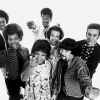
Sly and the Family Stone
band / ensemble / orchestra
Marcus Miller
bassb.1959

Anthony Jackson
bass, electric
James Jamerson
bass, electric1938 - 1983
AAJ: I mentioned that I never saw Jimi, but I did have the pleasure, in the early seventies, of seeing and hearing the master of the Flying V. A lefty that just smoked the house down. Talking about the great

Albert King
guitar, electric1923 - 1992
JH: Oh yeah, I saw Albert too. Incredible player that influenced me a great deal.
AAJ: Yeah, he was opening for a rock artist. I was young and didn't even know who he was. We sure the fuck knew who he was by the time his set was over.
JH: (laughing) Yeah, he was something. Can't go wrong with any of the Kings really.
AAJ: For sure. The three Kings. Saw Freddie and B.B. too. Freddie was the best blues guitarist I ever saw, regardless of last name. After the first two Yellowjackets records with co-founder Ford, the band shifted, as we talked about, to a saxophone with Russo and later Mintzer. Although you had some guest guitarists, the fact that you have played with Allan Holdsworth, Stern,

Oz Noy
guitar
Michael Landau
guitarJH: It just sort of happened that way. But I was happy about it for sure (excitement in his voice). I love playing with all those guys. I really loved playing with Holdsworth. He took things to a whole other level harmonically and just the vibe of the music. Allan's playing was very deep emotionally. I also got to play with a couple of other great drummers when playing with Allan. Both Chad Wackerman and

Virgil Donati
drumsb.1958

Gary Husband
drumsb.1960
AAJ: One of your projects in 2019 was getting Stern and Lorber to record together. Two long time jazz and fusion artists that both have recorded a ton of music, but that had never played together before. As Stern put it in a conversation a few months ago, "Jeff and I have been in different orbits." That project came to fruition with the record Eleven (Concord Jazz, 2019). You get the credit or the blame for that, I would say the former(laughing). How did all that come about?
JH: Well, I have worked with Jeff a lot since 2012. We have done six records together.
AAJ: Yeah, including the Grammy winning Prototype (Shanachie, 2017). Congrats on that. That gives you three, I believe, adding in the two with the Yellowjackets.
JH: Three is correct and thanks for that, Jim. Jeff had some new tunes that he was playing for me that I thought were great. So, I figured he was planning to do another record. We had done six records together at this point. They are all different, of course, but still coming from a similar place with the horns and all that. So, Jeff was wanting to do something different for our seventh record. That was our challenge to come up with something. One day Jeff mentions in conversation that one time. years ago, he got to play on stage a bit with Mike Stern and how cool that was. Well, that was all I needed for the light bulb to go on. I asked him if he would be interested in doing a record with Mike. Jeff immediately got excited and thought that could be a very interesting project. My thought was that it would be as well, because they come from two different styles or camps of music. I wasn't sure if they would write together or each come in with their own tunes.
AAJ: They ended up doing the latter, of course.
JH: Yeah, and that was fine. No matter how we did it, the idea was that both Mike's fans and Jeff's fans would be curious and interested.
Tags
SoCal Jazz
Jimmy Haslip
Jim Worsley
United States
California
Los Angeles
The Yellowjackets
Robben Ford
Marc Russo
Russ Ferrante
bob mintzer
Will Kennedy
Peter Erskine
Alex Acuna
Luis Conte
Paulino de Costa
Dave Samuels
Bobby McFerrin
Brenda Russell
Al Jarreau
Dewa Budjana
Jimmy Johnson
Vinnie Colaiuta
dwiki dharmawan
Jeff Lorber
Chad Wackerman
Allan Holdsworth
Nicolas Meier
jeff beck
Asaf Sirkis
Saat Syah
Karma Auger
Brian Auger
Count Basie
Tito Puente
Miles Davis
John Coltrane
Thelonious Monk
Dave Brubeck
Eric Dolphy
Eric Burdon and The Animals
The Beatles
The Rolling Stones
Led Zeppelin
Jimi Hendrix
Jethro Tull
Vince Mendoza
Cliff Hagan
Mike Stern
Allman Brothers
Cream
Frank Zappa
Yes
The Byrds
Blood Sweat & Tears
Chicago
Bob Dylan
Joni Mitchell
Freddie Hubbard
Pat Martino
Benny Carter
Larry Coryell and the Eleventh House
Herbie Hancock and the Headhunters
Chick Corea Return to Forever
Jaco Pastorius
Weather Report
Larry Graham
Graham Central Station
Sly Stone
Marcus Miller
Louis Johnson
Anthony Jackson
James Jamerson
albert king
Oz Noy
Michael Landau
Virgil Donati
Gary Husband
Dave Weckl
Leni Stern
Eric Marienthal
Chuck Loeb
Bobby Colomby
Jing Chi
Otmaro Ruiz
Brian Eno
Larry Goldings
Steve Gadd
Gary Novak
Scott Kinsey
Bob Reynolds
Brandon Fields
Jimmy Branly
Trey Henry
randy brecker
Gregoire Maret
Tommy Bolin
dave mason
Kiss
CSN
Rod Stewart
Ron Wood
Chaka Khan
Bruce Hornsby
Michael Bolton
Bruce Kulick
Meatloaf
April Lawton
Mike Pinera
Blues Image
Mitch Mitchell
Sandy Gennaro
Pat Travers
Peter Frampton
Gino Vannelli
Mark Stein
Vanilla Fudge
Spencer Davis
David Crosby
Graham Nash
Steve Winwood
joe cocker
Comments
PREVIOUS / NEXT


Support All About Jazz
 All About Jazz has been a pillar of jazz since 1995, championing it as an art form and, more importantly, supporting the musicians who make it. Our enduring commitment has made "AAJ" one of the most culturally important websites of its kind, read by hundreds of thousands of fans, musicians and industry figures every month.
Go Ad Free!
To maintain our platform while developing new means to foster jazz discovery and connectivity, we need your help. You can become a sustaining member for as little as $20 and in return, we'll immediately hide those pesky ads plus provide access to future articles for a full year. This winning combination vastly improves your AAJ experience and allow us to vigorously build on the pioneering work we first started in 1995. So enjoy an ad-free AAJ experience and help us remain a positive beacon for jazz by making a donation today.

Los Angeles
Concert Guide | Venue Guide | Local Businesses
| More...
Showcase
Featured

Darwin AI: Surivior Choice
By Alex Otey buy

Carnaval - The Songs Were So Beautiful
By Antonio Adolfo buy
Giveaway

Playlist
Premium
Weekly newsletter
Get more of a good thing
Our weekly newsletter highlights our top stories and includes your local jazz events calendar.
Los Angeles
Concert Guide | Venue Guide | Local Businesses | More...Showcase
 Buy Now
Featured
Darwin AI: Surivior Choice
By Alex Otey buy
Carnaval - The Songs Were So Beautiful
By Antonio Adolfo buyGiveaway